


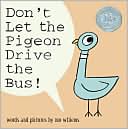
Mo Willems’s unparalleled children’s book titled Don’t Let the Pigeon Drive the Bus! is a splendid and comical tale of a character whose attitude is likely to appeal to children between the ages of four and seven, but all library patrons should find it delightfully entertaining. The book was named a Caldecott Honor Book in 2004, New York Times Bestseller, Publishers Weekly Bestseller, ALA Notable Book, and Booklist Editor’s Choice. The pigeon lies in wait for a bus driver to take a break so he can present his case on why he deserves to drive the bus. His arguments include that he is capable of driving because his cousin Herb drives a bus, that he wants to go first, that he can make it a game, that he will just go once around the block, that it is his dream, that he will pay money, that the reader’s mom would let him, that he will be the reader’s best friend, and that it is just a bus. Children and adults alike will be the masters of the pigeon’s fate and be forced to choose whether or not he or she will in fact let the pigeon drive after his temper tantrum and the bus driver returns to ask, “You didn’t let the pigeon drive the bus, did you?”
In my opinion, Mo Willems creates the perfect arguments and exquisite illustrations to back those up. His pigeon is adorable and irresistible until the tantrum where his eyes turn red. Still amused, we are forced to answer his plea. I liked that he is so dedicated to his request, and I especially liked that the book forces its readers to make that decision. After making the decision, the book is left open ended for readers. Readers can choose to be strong or give in, and create their own story. I also enjoyed the earthy tones and crayon colored illustrations. The pigeon is always looking at the reader, and children will finally be able to take the role of an adult and make choices about what is the easiest route and what is right.
I actually searched for this book in the library the other day because it is all the rage, and I wanted to know what it was all about. Our professor mentioned that the pigeon was on twitter, and since it was a Caldecott Honor book, I chose to use it as an entry for my reading journal. Basically, it reminds me of all children, and it makes me happy to see them forced to make a decision based on an argument because they often make the same type of argument. With the success of Don’t Let the Pigeon Drive the Bus!, Mo Willems went on to create Don't Let the Pigeon Stay Up Late!, The Pigeon Finds a Hot Dog!, The Pigeon Has Feelings, Too!, The Pigeon Loves Things That Go!, and The Pigeon Wants a Puppy. All of these books look to be just as entertaining and the arguments in them are the common ones of children around the world. Willems is also the author of Knuffle Bunny: A Cautionary Tale, Knuffle Bunny Too: A Case of Mistaken Identity, Edwina, the Dinosaur Who Didn't Know She Was Extinct, Leonardo, the Terrible Monster, Time to Pee!, and Time to Say "Please"! In addition to these books, Mo Willems also wrote another series called The Elephant and Piggie. Similar to the books about the infamous pigeon, these books get a lot of attention.
This particular book says something about what children find entertaining. In this book, they get to play the role of an adult in the decision making process. The illustrations are also geared particularly toward their interests, and they are simple which means that a child is capable of making the same ones. This is probably the reason that they are so entertained by them.
References
Willems, M. (2003). Don’t let the pigeon drive the bus. New York: Hyperion Books for Children.


