Readings Required for Journal Blog

  • Yoshiko Uchida
  • Laurence Yep
  • Jerry Pinkney
  • Julius Lester
  • Dr. Seuss
  • Children's Books which have been produced as feature films comparison
  • Caldecott vs. Newbery Awards
  • Corretta Scott King Award book
  • Newbery Award winning or Honor books published within the last ten years
  • Caldecott Award winning or Honor Books Published within the last ten years

Questions answered and personal reactions to books:

*Likes and dislikes
*Life experiences that influenced reaction or response
*Comparison to another book or books by the same author
*New information or insight about children's literature gained

Tuesday, July 28, 2009

Coretta Scott King Award Book: Beautiful Blackbird by Ashley Bryan


The Coretta Scott King Award is given to memorialize Dr. Martin Luther King Jr., and his wife, Corretta Scott King for their contributions to promoting peace in America. The award is given to an African American author and also to an illustrator, whose books published during the preceding year, made educational and inspirational contributions to literature for children. Similar to the Newbery and Caldecott Awards, these awards are sponsored by the American Library Association (Brown and Tomlinson, 2005).

In 2004, Ashley Bryan won the Coretta Scott King Award for illustrations in his picture book, Beautiful Blackbird. The book is a perfect example of multicultural literature for children. The book is about a group of birds that are every different and beautiful color of the rainbow, but blackbird was voted the most beautiful bird in the forest. The red, yellow, green, and blue birds want to be beautiful too, so they persuade blackbird to paint their feathers with a touch of black. Blackbird wants them to understand that beauty comes from within, but he still gives them all a spot of black on their feathers, and they all stand in line to wait for their opportunity to be painted.

I have a fond opinion of Beautiful Blackbird. The illustrations are colorful and unique because they are made from colorful paper cut-outs to form collages. Bryan tells us that the scissors in the front and back of the book are the ones that his mother used for sewing and that he used for the collages in this book. I appreciate that some people can take scissors and turn paper into beautiful artwork. I also liked that the book was based on a folktale. It was one from the Illa-speaking people of Zambia which I learned from this book, and I enjoy books that teach about different cultures and heritages.

Where I went to high school, we had approximately 6 students that were not Caucasians. None of those students were African Americans. As a matter of fact, they were mostly exchange students. When I went to college, I got to know so many people with many different ethnic backgrounds, and I feel more knowing and tolerant to students with diverse backgrounds, today. I think that all children should read this book because today’s schools are much more diverse, and they need to be knowledgeable and accepting of each other.

Ashley Bryan is truly an artist. He has been illustrating and writing children’s books for many years, and let us not forget that he gardens, makes stained glass panels out of sea glass, and makes puppets. He also won a Coretta Scott King Award for Illustration for Beat the Story-Drum, Pum Pum, and Lion and the Ostrich Chicks. He is fond of folk tales and uses rhythmic tones in all of his books.

I loved the line, “Our colors sport a brand-new look, A touch of black was all it took.” This simple example of children’s literature teaches us that in this life, while it’s alright to be different, we must blend and work together. This is an excellent example of multicultural literature and a great read for children.

References

Brown, C. L. & Tomlinson, C. M. (2005). Essentials of children's literature.(5th ed.). Boston: Pearson A and B.

Bryan, A. (2003). Beautiful Blackbird. New York: Atheneum Books for Young Readers.

Monday, July 27, 2009

Newbery Honor Book 2: Joey Pigza Loses Control by Jack Gantos


Joey Pigza Loses Control by Jack Gantos is a wonderful book for children due in part to its really realistic nature. It was named a Newbery Honor Book in 2001, and while it claims to be for children between the ages of 12-14, I think that a much older audience would also enjoy it. Joey Pigza is a typical boy who has, until now, been without a father. He is on medication for Attention Deficit Hyperactive Disorder, also. I know many children that fit this profile. His father is an alcoholic, and while he is anxious to get to know him, he is scared. He is afraid that his father, Carter, and his grandmother won’t like his Chihuahua, Pablo, that they won’t like pizza, and that his grandmother will try to put him in the refrigerator. It turns out that Carter made a conscious effort to change his son’s perception about him, and Joey tries to stop taking his meds. He tries to help the baseball team that his father coaches win the championship, but when he fails to take his meds, he makes them lose (at least that’s what everyone says) by wandering away to find his mom, and his father becomes really angry. Unfortunately, Joey realizes that he is similar to his father but that his father will not change, and so he is ready to go back to live with his mother.

I adored this book. Children have several hundred books at their disposal, but books that they can actually apply to their life experiences are fewer. This book takes children into the life of a character with whom they can identify. I know several children who have these problems, and my parents were divorced, also. I can really identify with this character, and I know that children do. I also loved the dog in the book and Joey’s relationship with him.

Jack Gantos is also the author of Joey Pigza Swallows the Key, The Jack Henry Series, about his alter ego, and The Rotten Ralph series. The Rotten Ralph Series is for a younger audience, and each of these three sets of series books feature the same characters throughout.

Children’s literature is meant for entertainment and often times to teach. In this particular book, we learn that children every where face the same obstacles. I would really recommend this book for children who struggle with A.D.H.D. and even to the ones who do not to become more associated with the disorder. I would also recommend the book to students whose parents are divorced especially if they want them to get back together. Adult struggles become those of the children involved, and they need to understand that while they feel powerless, sometimes there is really nothing that they can do to help.

References

Gantos, Jack. (2000). Joey Pigza loses control. New York: Farrar, Straus and Giroux.

Newbery Honor Book 1: Everything on a Waffle by Polly Horvath


Everything on a Waffle by Polly Horvath is a story about a curious little girl who ends up finding peace and resolve. The book was named a Newbery Honor Book in 2002 and is appropriate for children between the ages of 12 and 14. Primrose Squarp is an orphan whose parents supposedly perished at sea, and despite her overwhelming suspicions, nobody in Coal Harbor believes that she is right to be suspicious. The town doesn’t want to pay Miss Perfidy wages to baby-sit her anymore, so she is relocated to her Uncle Jack’s home. Neither Primrose nor Uncle Jack is happy about this, and she is disturbed by noises in his home at night. She enjoys a restaurant called The Girl on the Red Swing where one can find everything served on a waffle. She finds solace in Miss Bowzer, the manager of the restaurant, and later learns that her missing parents were located at Comox Hospital. Happy to have met the people that she did and had the adventures that she had, she is relieved to find her parents, but also grateful for the experience.

The experience while reading this book was a flight of the imagination. It was philosophical, unique, humorous, and heartwarming. I very much enjoyed Primrose Squarp and the characters that she met along her journey. I also thought that the ending of the book was very charming as Squarp told her readers how to make waffles and then added to eat them with butter and syrup, but if you are at her favorite restaurant, everything goes on waffles.

In this world, everyone has secrets and we long for certain questions to be answered. This little girl deserved one and refused to stop until she had it, and this is what makes Squarp’s character so admirable. I think that a lot of school-aged children could relate to this book. Being in the school system, we realize that many children have lost their parents and adopters are not always begging for them. They are often even mistreated. A lot of children will find peace in this story.

This is the first book that I have read by Polly Horvath, but she is the author of The Trolls, An Occasional Cow, The Happy Yellow Car, and When the Circus Came to Town. According to the book jacket for Everything on a Waffle, The Trolls is also a very adventurous story with entertaining characters. It seems that Hovarth’s books have a common theme; they are all adventurous in nature and feature characters on a quest for truth through unlikely, humorous tales.

From this book, I gathered that not all realistic fiction in children’s literature has to be plausible and that ridiculous elements, coupled with realistic ones, can make a grand story. With this in mind, the story absolutely would not have been the same without Miss Bowzer, her cleverness, and her waffles.

References

Horvath, P. (2001). Everything on a waffle. New York: Farrar Straus Giroux.

Sunday, July 26, 2009

Caldecott Honor Book 5: Click Clack Moo Cows That Type by Doreen Cronin


Click, Clack, Moo, Cows That Type by Doreen Cronin, illustrated by Betsy Lewin is Cronin's first picture book which was named a Caldecott Honor book in 2001 and was also a New York Times Bestseller. Farmer Brown hears the sounds from a typewriter all day because he can’t get his cows to stop typing. The repetitive noises of the typewriter were irritating, but he really could not believe that the cows were typing him notes. In the first note, the cows requested electric blankets because their barn was cold at night. He remembered leaving an old typewriter in the barn, and he was surprised enough that they had found it, but he said no to their request. Unfortunately for Farmer Brown, the cows refused to give him milk with another note taped on the barn door exclaiming that the hens were also cold and that they needed electric blankets, as well. The hens refused eggs. On his typewriter, the farmer wrote a reply and stayed strong proclaiming that he would not fulfill their wishes because they were cows and hens. A new character, Duck emerges to take Farmer Brown’s note to the cows. The cows had a meeting and decided to send the typewriter with the duck as soon as they had their electric blankets. He did as he was told, and waited for Duck. Unfortunately, the duck typed a note requesting a diving board for the pond because it was boring. The last picture in the book shows the duck diving into the pond from a diving board.

I am fond of the pictures and think that the illustrations are eye catching and accurate. I appreciate the angry looks on the faces of the hens, cows, and the farmer because they depict the conflict, and we can almost see the wheels turning in Duck's mind when he goes to take Farmer Brown’s note to the cows. I especially enjoyed that all of the barnyard animals listened to the emergency meeting held by the cows and could not figure out what was going on because they could not speak “moo.” I find the book witty and appealing to young readers, but I do think that the book conveys a message of manipulation. The book has comedic situations and is entertaining, but do we really want our children to be deceitful to get what they want when they want it? This does not change the book’s illustrations or the humor in the story, but I am not sure that if I was a parent that I would buy this book for my child.

I suppose it is admirable that the cows had enough good sense to outsmart the farmer, especially if he was not taking adequate care of the barnyard animals, and they were cold. They give him the things that he needs, so he should provide them with what they need to stay comfortable. I am glad that they could reach a negotiation, but the poor farmer is then manipulated by another character. My reaction to this book likely comes from teaching. Students often demand things, often ridiculous requests to do what you ask of them, and while Farmer Jones is depicted as mean and hateful, teachers are sometimes as well. Students will say “If you let me go to the bathroom, I’ll do my work.” I didn’t know that there was a children’s book that taught them this negotiation tactic.

Doreen Cronin is also the author of Duck for President and Giggle Giggle Quack. Both of these books were also illustrated by Betsy Lewin. Diary of a Worm was illustrated by Harry Bliss. Giggle Giggle Quack is a sequel to Click Clack Moo Cows That Type, and I liked it a little bit better, but I can’t decide if Duck is a stereotypical figure and used for entertainment purposes or if children should be keenly aware of his behavior and not repeat it. The bad thing is that Duck is never disciplined or faces any repercussions. In this book, Farmer Brown leaves his brother in charge of the animals and Duck rewrites the instructions on how to take care of the animals to his benefit, and while there is no real harm, the animals were inappropriately cared for.

This book opened my eyes to the fact that people have differing opinions of the appropriate content of children’s books. I noticed that a lot of my classmates chose to review this book in their journals, also, and though I haven’t read all of them, yet, I bet that most of them were fond of the book. It was a Caldecott Honor book, so many people must have liked it. It was my least favorite of the ones that I have read so far. Though I love animals and am usually a big fan of them in children’s books, I just didn’t enjoy this one as much.

References

Cronin, D. (2000). Click clack moo cows that type. New York: Simon and Schuster Books for Young Readers.

Monday, July 20, 2009

Caldecott Medal Book 4: The Invention of Hugo Cabret by Brian Selznick


The Invention of Hugo Cabret by Brian Selznick was the 2008 Caldecott Medal winner. The story is a masterful tale of a brave boy who was ill-fated from the beginning. Lucky for Cabret, the series of unfortunate events that followed after his father’s death would lead him to life of which he could only dream. He lived in a train station, and when Hugo’s father died in a museum fire, he was raised by his hateful uncle who disappeared only a few short weeks after he took him to raise. Fortunately, Hugo’s uncle had a job and made him his apprentice, so after he died, Hugo continued to work on the clocks around the station, but he did not cash his uncle’s checks. Instead, he made his way stealing and hoping that one day things would get better. The entire story rests upon an automaton that Hugo salvaged from the museum fire. His father had been working on it, and Hugo was convinced that his father had crafted it to send him a message. Hugo was forced to steal parts from the old man in the toy booth to fix his automaton. When Hugo was caught stealing a toy, the old man made him empty his pockets. He took his notebook with all of his drawings of the automaton. Several twists of fate and strange happenings later, Hugo learns that Isabelle, the old man’s goddaughter had managed to retrieve his notebook. He worked for the man behind the toy counter until Georges thought he stole the notebook and again kicked him out of his shop. Isabelle had the key to work the automaton, and the two discovered that it had been Georges Melies’s invention. After running from the station inspector for thieving milk and croissants and the discovery of his uncle’s death, Hugo is saved by Georges Melies and his goddaughter. Georges had stopped making movies after his good friends, Isabelle’s parents, were killed. The two along with a few fans, get Georges to begin again, and Georges takes Hugo into his home where he could invent his own automaton.

I liked absolutely everything about this book. I have never read a book so meticulously written and illustrated. The pages in the book imitate a movie reel, and I love the black and white sketches. They are so clear and extraordinary. The story line was faultless, and I loved the rags to riches story. Though Hugo is a thief, he can’t be punished in the minds of readers because he had it so rough, and Isabelle is a doll. I couldn’t put the book down, and I read / viewed all 533 pages in one sitting.

The book is full of secrets kept by the characters. I think this is why the book was so intriguing. I grew up with my grandparents around, and I have a soft spot for the relationships between the elderly and children. They have so many stories to pass on to us.

This author also wrote The Houdini Box, The Boy of a Thousand Faces, and worked with many other authors as an illustrator. The Invention of Hugo Cabret is Selznick’s longest work and his greatest masterpiece.

Finally, I learned that not all children’s literature is short and for very young audiences. Though I have gathered that there is some confusion about what to call this book (Graphic Novel, flip book, etc.) to me, it is the perfect blend of illustrations and text. The history of the movies really come alive in this book as we see where they began and where they ended up at the turn of the 20th century. I would suggest this book for children ages nine and older. The pictures are stunning and the story is charming.

References

Selznick, B. (2007). The invention of Hugo Cabret. New York: Scholastic Press.

Sunday, July 19, 2009

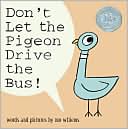
Caldecott Honor Book 3: Don't Let the Pigeon Drive the Bus! by Mo Willems


Mo Willems’s unparalleled children’s book titled Don’t Let the Pigeon Drive the Bus! is a splendid and comical tale of a character whose attitude is likely to appeal to children between the ages of four and seven, but all library patrons should find it delightfully entertaining. The book was named a Caldecott Honor Book in 2004, New York Times Bestseller, Publishers Weekly Bestseller, ALA Notable Book, and Booklist Editor’s Choice. The pigeon lies in wait for a bus driver to take a break so he can present his case on why he deserves to drive the bus. His arguments include that he is capable of driving because his cousin Herb drives a bus, that he wants to go first, that he can make it a game, that he will just go once around the block, that it is his dream, that he will pay money, that the reader’s mom would let him, that he will be the reader’s best friend, and that it is just a bus. Children and adults alike will be the masters of the pigeon’s fate and be forced to choose whether or not he or she will in fact let the pigeon drive after his temper tantrum and the bus driver returns to ask, “You didn’t let the pigeon drive the bus, did you?”

In my opinion, Mo Willems creates the perfect arguments and exquisite illustrations to back those up. His pigeon is adorable and irresistible until the tantrum where his eyes turn red. Still amused, we are forced to answer his plea. I liked that he is so dedicated to his request, and I especially liked that the book forces its readers to make that decision. After making the decision, the book is left open ended for readers. Readers can choose to be strong or give in, and create their own story. I also enjoyed the earthy tones and crayon colored illustrations. The pigeon is always looking at the reader, and children will finally be able to take the role of an adult and make choices about what is the easiest route and what is right.

I actually searched for this book in the library the other day because it is all the rage, and I wanted to know what it was all about. Our professor mentioned that the pigeon was on twitter, and since it was a Caldecott Honor book, I chose to use it as an entry for my reading journal. Basically, it reminds me of all children, and it makes me happy to see them forced to make a decision based on an argument because they often make the same type of argument. With the success of Don’t Let the Pigeon Drive the Bus!, Mo Willems went on to create Don't Let the Pigeon Stay Up Late!, The Pigeon Finds a Hot Dog!, The Pigeon Has Feelings, Too!, The Pigeon Loves Things That Go!, and The Pigeon Wants a Puppy. All of these books look to be just as entertaining and the arguments in them are the common ones of children around the world. Willems is also the author of Knuffle Bunny: A Cautionary Tale, Knuffle Bunny Too: A Case of Mistaken Identity, Edwina, the Dinosaur Who Didn't Know She Was Extinct, Leonardo, the Terrible Monster, Time to Pee!, and Time to Say "Please"! In addition to these books, Mo Willems also wrote another series called The Elephant and Piggie. Similar to the books about the infamous pigeon, these books get a lot of attention.

This particular book says something about what children find entertaining. In this book, they get to play the role of an adult in the decision making process. The illustrations are also geared particularly toward their interests, and they are simple which means that a child is capable of making the same ones. This is probably the reason that they are so entertained by them.

References

Willems, M. (2003). Don’t let the pigeon drive the bus. New York: Hyperion Books for Children.

Thursday, July 16, 2009

Caldecott Medal Book 2: My Friend Rabbit by Eric Rohmann


My Friend Rabbit by Eric Rohmann was the Caldecott Medal winner in 2003. The story would likely appeal to children between the ages of four and eight due to few words and vivid illustrations. The story is a charming tale about an awkward friendship. At the beginning of the story, Mouse lets us know that trouble follows his friend Rabbit. Rabbit can be found on the first page of the story holding Mouse’s plane. Due to Rabbit’s incredible strength, Mouse’s airplane ends up in a tree. Mouse is distraught about losing his plane and longingly stares at it. On impulse, Rabbit says that he will fix the problem. For the next eight pages, Rabbit finds several animal friends to help. He lifts each of them up, but none of them are able to reach the plane. He orders the animals to stand on one another, and the elephant, the rhinoceros, the deer, the duck, the bear, the hippopotamus, the crocodile, Mouse, Rabbit and the squirrel are standing on top of each other in that order. When this doesn’t work, Rabbit held the squirrel and the squirrel held Mouse. Regretfully, the entire pyramid tumbled down, and all of these animals were mad at Rabbit. Mouse managed to reach the plane and hold on. He begins to pilot the plane and retrieves Rabbit. Again, the plane is plunged into a tree because Rabbit is blocking Mouse’s vision with a hug. Mouse reiterates that wherever Rabbit goes, trouble follows, and one can not hold back the smile at the end of the book because Rabbit has an idea to save the day.

I enjoyed the story and its simplicity, but as I mentioned earlier, the book is for extremely young children. The story is uplifting and says a lot about friendship in its very few pages. Relationships with friends are not perfect, and there is a lot of give and take. Sometimes people mean well, and that is not the way that it seems. Mouse loves Rabbit despite his indiscretions, and I think that aside from the entertainment value, it is a heartwarming gesture. Rohmann’s illustrations are bright and explanatory. I especially enjoy that the pictures span two pages. The pictures are large, and I think that this is an excellent book to read aloud to a group of children.

Rabbit reminds me of my sister. Like him, she means well. When I was in the 10th grade, my final project for a Science class was an egg drop. After our thoughts on how to protect the egg were carried out, she demanded that she climb on top of the roof to test the project. Needless to say my egg never broke, but my sister’s ankle did when she fell. Though she is eight years older than me, she needs my supervision when performing her stunts.

Eric Rohmann also wrote and illustrated The Cinder-Eyed Cats, and Time Flies (also a Caldecott Honor book), and he illustrated The Prairie Train written by Antoine O’ Flatharta. Time Flies is a wordless picture book, which is a daring endeavor for any author in my opinion. This book, similar to My Friend Rabbit, must be examined extensively to make sense of all of the illustrations. Sometimes, fewer words create more meaning. Time Flies is about an adventurous bird that lands itself in a museum where dinosaurs come to life.

This book teaches children problem solving skills and that where there is a will there is a way. Also, children learn that people and relationships are not perfect, yet we love each other anyway. I learned that few words can have a very deep meaning, especially in a children’s book.

References

Rohmann, E. (2002). My friend Rabbit. Brookfield: Roaring Book Press.

Wednesday, July 15, 2009

Caldecott Honor Book 1: Olivia by Ian Falconer


Olivia is an enjoyable children’s book written and illustrated by Ian Falconer. The book was named a Caldecott Honor book in the year 2001, and New York Times named the book a # 1 best seller. Ian Falconer dedicates the book to his children: the real Olivia, Ian, and William, who was not born in enough time to play a role in Olivia. Olivia is a very talented little Piglet. The book is about her energetic personality and her relationship with her family. Typically, her energy is exhausting to her and everyone who comes into contact with her. She acts as a role model to her brother, and he is always mimicking her actions. She must be strong and discipline him because he won’t leave her alone. I very much enjoyed that the family has a dog and cat like the typical American family even though they are all pigs. Olivia has a rigid daily routine, like anyone else, and though her mother is busy and tired, she always finds time for Olivia even if a negotiation is required, and at the end of the day, her mother still loves her very much.

I very much enjoyed the book. Olivia is a delightful child, and I think that the fact that she is a pig would really appeal to young readers. As a child, I loved picture books featuring animals, and I think that reading those books as a child sparked my interest in animals. I remember drawing and coloring pictures of animals, and if I had read this book as a child, Olivia would have become an object of my art. I especially enjoyed the reference to Jason Pollock’s painting and the fact that Olivia wanted to copy his painting because she said that it couldn’t have taken him more than five minutes. I think that this part of the book shows us two things. The first is that children use childhood experiences to shape their lives and mimic whomever they come into contact with, and this is why it is so important that we make positive role models for them. The second is that children need to feel as if they can accomplish great things, and if we expect them to do something that they can’t do, they get discouraged. Olivia couldn’t wait to try to paint like Jason Pollock because she knew that she could, and she painted her masterpiece on the wall and got sent to time out.

After the success of Olivia, Falconer proceeded to write the sequels Olivia and the Missing Toy, Olivia Saves the Circus, Olivia Forms a Band, and Olivia Helps with Christmas. Again, Falconer uses his children as characters in the story, and they seem so real. In Olivia Saves the Circus, she again shows her energetic and uncanny ability to please people with her courage. When she realized that all of the circus performers at the circus that she and her mother went to were sick, she begins to perform the circus acts.

In reading this book, I learned that children’s books in general have the ability to please even adults. Falconer teaches children and adults that life is what we make it, and these characters have busy daily lives, but they make time for each other. This book says a lot about the closeness of family as well.

References

Falconer, I. (2000). Olivia. New York: Atheneum Books for Young Readers.

Tuesday, July 14, 2009

Caldecott vs. Newbery


Caldecott and Newbery Medals are both extremely prestigious awards granted to the authors of special works. Both awards are sponsored by the Association for Library Service to Children division of the American Library Association. The Caldecott Medal is awarded to the most distinguished picture book illustrator, and the Newbery award is granted to the author of the most distinguished piece of literature. Both of these awards are granted annually, and both awards are also only given to U.S. Citizens. Additionally, each award also recognizes a list of honor books, yearly.

In the Appendix section of Essentials of Children's Literature, one can locate a list of these books for each year. For example, in 2004, the winner of the Caldecott Medal was The Man Who Walked Between the Towers by Mordecai Gerstein, and honor books for this award include Ella Sarah Gets Dressed by Margaret Chodos-Irvine, What Do You Do With a Tail Like This? by Steve Jenkins and Robin Page, and Don't Let the Pigeon Drive the Bus by Mo Willems. That same year, The Tale of Desperaux: Being the Story of a Mouse, a Princess, Some Soup, and a Spool of Thread by Kate DiCamillo won the Newbery Medal, and honor books in 2004 include Olive's Ocean by Kevin Henkes, and An American Plague: The True and Terrifying Story of the Yellow Fever Epidemic of 1793 by Jim Murphy (Brown and Tomlinson, 2005). I think that both of these awards are equally prestigious but target different talents. Again, they are both awarded by the same association, given annually, and one must be a U.S. Citizen to receive the award, but the Caldecott Medal is given to an illustrator, and the Newbery Medal is given to an author of distinguished literature.

References

Brown, C. L. & Tomlinson, C. M. (2005). Essentials of children's literature.(5th ed.). Boston: Pearson A and B.