


Sunday, August 2, 2009
Conclusion
Though I have completed the required readings and blog entries for my Advanced Children's Literature course, I do not plan to stop using this blog for reviewing good books, so follow and enjoy. School is starting soon, though, so there might not be 17 entries in three weeks, but I'll do the best that I can. Not only did I learn a lot about blogging from this project, but I also learned a lot about children's literature and what it has to offer.

Journey to Topaz by Yoshiko Uchida

Journey to Topaz by Yoshiko Uchida is illustrated by Donald Carrick and gives its audience a true glimpse of reality. Carrick’s illustrations certainly show the heartache and horror of this little girl's life and the lives of her Japanese-American family. In December 1941, when war broke out between the United States and Japan, Yuki Sakane can no longer look forward to the Christmas holiday. Unfortunately, her parents had come to America from Japan and had never become American Citizens. Because of this, they are called “enemy aliens” and looked upon with suspicion. Her father is arrested and sent to San Francisco, and after one visit from the family, he is sent to a P.O.W. camp in Montana. Due to an executive order signed by Franklin D. Roosevelt, Yuki and her remaining family members are shipped to live in isolation, behind barbed wire in inland camps. Two-thirds of these Japanese people were American citizens. Because of the attack on Pearl Harbor, many Americans felt as though Japanese people living in Hawaii were responsible for sabotage, so the F.B.I. evacuates 110,000 people of Japanese ancestry from the West Coast. World War II ensues. Yuki, her mother, and Ken, her brother, are sent to live in a horse stall in Tanforan Race Track Assembly Center. She becomes friends with a girl named Emi and her grandparents who move with her and the family to Topaz, Utah. Her father rejoins the family at Topaz after he is cleared. Ken enlists in the American Army to show his patriotism, and Yuki is mortified when her new friend, an elderly man named Mr. Kurihara, is shot and killed by a guard. They experience many hardships including the dust storms in Utah. In 1943, Yuki must part with everyone to whom she has grown close but is glad to be out of the desert when her father gains permission to seek employment in Salt Lake City, Utah.
This book was very enlightening. I knew that after the beginning of World War II things in America got tough for the Japanese, but I had no idea what these families really went through. I didn’t know that they were relocated to camps with barbed wire that surrounded entire families. I can not believe how these people were treated according to Uchida. I especially liked that Yuki’s character was so selfless and that even though she had a chance to get out, she felt as though she was abandoning those left behind. To me, this ridiculous form of holding families hostage seems like a miniature Holocaust. Until reading this book, I had no idea that Americans supported this torture tactic.
As a teacher and as an American, I know that just because you are of a certain race doesn’t mean that you are part of a terror plot. I guess it can be called tolerance or understanding. I also could not imagine putting children in those circumstances. I am happy that everything turned out as well as it could for this family and families like them because they certainly had it rough, and reading this book was an eye-opening experience.
Yoshiko Uchida also wrote Sumi and the Goat and the Tokyo Express, Hisako’s Mysteries, In-Between Miya, Sumi’s Special Happening, The Sea of Gold and Other Tales from Japan, Sumi’s Prize, The Forever Christmas Tree, and Rokubei and the Thousand Rice Bowls. It is no surprise that Uchida wrote mostly about Japanese ancestry and living in America during World War II because that experience was her childhood. She wrote a lot about Japanese children as she has visited the country several times, but Journey to Topaz is in essence about her experience as she and her family was actually sent to the Relocation Center in Topaz (Uchida, 1971).
From reading this book, I learned that children’s literature has the ability to tell a true, fictional, or semi-true story. Children’s literature can also be an outlet for expression. I am so glad that Yoshika Uchida got to tell her story from another character’s perspective, and this book would be an excellent teaching tool for a history class learning about WWII.
Uchida, Y. (1971). Journey to Topaz. New York: Charles Scribner’s Sons.
Auntie Tiger by Laurence Yep with pictures by Insu Lee

Auntie Tiger, by Laurence Yep with pictures by Insu Lee, is a lovely example for children about the bond of siblings. Yep puts a new spin on Little Red Riding Hood with Auntie Tiger and her persuasive abilities. Big Sister and Little Sister live in China with their mother, who is a widow. The older sister is responsible and bossy, as older sisters usually are, and the younger sister is a complainer and lazy because she knows the older sister will complete the chores. The mother goes out to find food and tells the girls not to open the door for anyone because she is aware of the tiger that is on the loose. The tiger is cunning and dresses as the girls’ Auntie. Big Sister notices his voice and the color of his hands, and he fixes those things. The little sister yanks open the door after being offered treats. He takes the sisters to the bedroom pretending to need a nap. Little Sister fans Auntie Tiger upon his request, and he eats her. Big Sister runs up in a tree and gets Auntie Tiger to fetch a bucket of water and a bamboo pole so she can drown him some birds to eat and then says that she will slide down the pole. He places the bamboo pole in his mouth so she can just slide down into his mouth, and she pours water down his throat drowning him. She cuts the tiger open and gets Little Sister out. Little Sister then promises to listen, and Big Sister promises to always take care of her.
I absolutely loved this book because I can relate to it. The illustrations are stunning and truly depicted as two sisters who are very close but quite jealous of each other. The words were carefully written, by Yep, to add every desired element. He used the elements of a fairytale while also incorporating the Chinese Culture, and even the relationship among two sisters and their mothers. My sister and I have this exact same relationship. I am Little Sister. She always takes care of me and would defeat a tiger for me if the need arose. I would do the same for her, but I make her do the chores. I do fear that the story was a little graphic and might give some children hope and trust that might not exist. If a child were really eaten by a tiger, no matter how much she trusts her sister, she would not be able to save her. Therefore, the risks that present themselves to children should not be overlooked. I know that it is a fairy tale, but I lack the imagination to see a child walking out of a dead tiger still alive. I guess it comes with age. Maybe young children can still envision it without a picture, but Lee did include a graphic photo of the tiger drowning.
According to the book jacket for Auntie Tiger, Laurence Yep is captivated by the theories on sibling rivalry because his brother earned him the name Laurence after a saint who died a gruesome death (Yep, 2009). He also wrote Dragonwings and Dragon’s Gate which are both Newbery Honor Books. He is a current author and very well respected and admired.
From this book, I learned that fairy tales will never go out of style, and it takes a special person to be able to recreate the old ones in all of their glory. Again, I loved the book because it was based on sibling rivalry which is something that I know about from experience.
Yep, L. (2009). Auntie Tiger. New York: HarperCollins Publishers.
Back Home by Gloria Jean Pinkney with pictures by Jerry Pinkney

Back Home, by Gloria Jean Pinkney with pictures by Jerry Pinkney, is an excellent example of having roots and wings. According to the book jacket, Gloria Jean Pinkney grew up in North Carolina, which is the setting in Back Home. She says that her own experiences contributed to this particular book. Her husband is quite an acclaimed illustrator, and with good reason. The pictures in Back Home are extraordinary (Pinkney, 1992).
The book is about a little girl named Ernestine who goes to visit her birthplace and her aunt, uncle, and cousin who still live on Sandy Bottom in North Carolina. Her uncle picks her up at the train station, and after the drive home, she is almost immediately ridiculed by her cousin, Jack. Before she goes to sleep that night, she wishes that they would become friends. The entire family makes comments about her dresses and the fact that she is incapable of completing chores and having a good time simply because she is from the city. She slips into country life quickly, however, as she asks for overalls from her aunt. She gives them to Ernestine from her mama’s old trunk, and she sleeps in her mama’s room at night. She makes a fool of herself several times. She falls from a ladder, inspects her legs for “insect bites,” and falls off of a goat. She is reluctant to go home, but she knows that school is starting and she looks forward to visiting again next summer. Jack gives her a gift to take with her. In the pouch, she finds “hard corn,” and she realizes that Jack has just been aggravating her when he says that he is going to name his new kid Princess, and asks what she thinks about the idea. Since she suggested it, this part of the story shows the two joining forces. Finally, Ernestine visits the grave of her grandmother and learns even more about her heritage. Uncle June tells Ernestine that she looks just like her grandmother.
I liked the final picture in the book which shows the bedroom where Ernestine slept and she and her uncle driving away from the farm out the window. I also like that the illustrations are three-dimensional, complete with shading and detail, and that the entire story could be told from the pictures alone. I do not mean that the words are not important, for Gloria Pinkney does an excellent job at narrating the story and using dialogue that shows the differences and similarities in the two generations and in the demographic.
This little girl and her cousin Jack remind me of my aunt and my mother when my mother was a child. Mom was twenty years younger than my aunt, and my aunt moved to Dayton, Ohio when my mother was born to get a job. When she would come back home, she would say that it was such a culture shock, but she loved it. This is what I meant by the fact that people can have roots and wings. I loved to visit my aunt in the city. My mother stayed behind, on the farm, and though it isn’t a farm anymore, we still live in a very rural area in Eastern Kentucky. Children are curious creatures, and they love to experience new things.
Jerry Pinkney also illustrated The Talking Eggs by Robert San Souci, which won a Caldecott Honor, a Coretta Scott King Honor, and was considered an ALA Notable. He also illustrated The Patchwork Quilt by Valerie Flournoy, which won the Coretta Scott King Award, the Christopher Award, was an IRA-CBC Children’s Choice, an ALA Notable, and a Reading Rainbow selection, and finally, he illustrated More Tales of Uncle Remus, which was retold by Julius Lester and received five starred reviews and was a School Library Journal Best Book of the Year and an ALA Notable (Pinkney, 1992). He has quite an impressive list of accomplishments.
At first, I didn’t think that I would like the book, but I did. I feared that the Pinkneys were going to portray these people as uneducated and unsophisticated, but this was far from the case. Actually, they did a great job explaining that people just know a lot about different things. I think that this book is a good example of being able to leave home and still appreciate it, and a lot can be learned by children who read this book because of the accents and cultural references, not to mention realizing the importance of their heritage.
References
Pinkney, G. (1992). Back home. New York: Dial Books for Young Readers.
Let's Talk About Race by Julius Lester

Let’s Talk About Race by Julius Lester is an inquisitive children’s book that really makes students think about what is under their skin. Lester makes the point that while we all have different characteristics; the inner-workings of the human body are the same. He explains that everyone is a story and that all of our stories begin the same way. We all have a birthday, parents, possibly siblings, favorite foods, hobbies, favorite colors, religions, nationalities, favorite time of day, and race. He also asks children questions on a full, colorful page throughout the book. For example, “How does your story begin?” (Lester, 2005). These questions force children to ask themselves how tolerant they are and forces them to become involved in the story. He says that while race tells a story, if one says that his or her race is better than someone else’s, that story is a lie. He gives a possible scenario for why people do this; perhaps they feel bad about themselves or they are afraid. He also takes into account that some people might say that they are better because of their communities, schools, genders, and occupations. He really gets children involved when he tells them to touch the hard bone below their eyes and to touch someone else’s. Children will discover that everyone’s bones are the same. Karen Barbour, the illustrator, then gives a picture of what everyone looks like without skin. He connects to children at the end of the book by telling them that he will take off his skin and asks them if they will do the same.
I really liked that Lester actively involved children in this book. He presents them with a profound and strong argument and then proves it. This book is bound to make children see race differently. The illustrations by Barbour are bright and colorful and really properly illustrate Lester’s descriptions and points. I especially like that the question mark on the second page fills an entire page and significantly points out how the relevance of the question.
The story reminds me of how my papaw used to tell me silly stories and how he would magically pull of my nose. His stories were usually didactic, and like Lester, he also usually narrated them in question form.
Lester also wrote To Be a Slave, which is a Newbery Honor Book, John Henry, which is a Caldecott Honor Book. He also wrote Long Journey Home: Stories from Black History. All of these books have historical undertones, and nearly all of them put a creative spin on the importance of civil rights.
From this book, I learned that race and Civil Rights are still prevalent themes in children’s and young adult literature. Our country as a whole has moved on from discrimination against African Americans and other diverse backgrounds, but there are still individuals that likely express prejudice, and books still exist to provide reasons why those thoughts are ridiculous. Finally, Lester does not only focus on race, though that is the title of the book. People can be discriminated against for hundreds of different reasons, and he names and combats some of those in this book.
References
Lester, J. (2005). Let’s talk about race. New York: HarperCollins Publishers.
Seuss Spec-tac-u-lar!!!!


Theodor Seuss Geisel, or the beloved Dr. Seuss, is an astonishing author. The Cat in the Hat was first published in 1957, and The Lorax was first published in 1971. Is there any other author that has stood the test of time like Dr. Seuss? How many other authors have a table in nearly every library in America dedicated to their work on their birthday? One can hardly refrain from the expression deserved while reading one of his masterpieces, and though I have in my years looked over some of the arguments meant to place Dr. Seuss in a less than admirable and unpopular light, the statements are false, and the critiques are unjustified. His books are simply amazing, and it stands to reason that they are still used in classrooms throughout the world, on a daily basis, to teach our children.
Consequently, The Cat in the Hat made quite a splash in 1957. Children were different, then, but not so much that Dr. Seuss books would not appeal to them anymore. The words in the book are not meant to create disorder and confusion, but rather to make order from confusion. Children love making sense of Dr. Seuss’s sequential storylines, and it is not as though the story is difficult to follow. It absolutely makes sense. Any child would be bound to understand the story if only following the illustrations, and though the words are basic, they are strung together in a way that is unparalleled by any author today. The “zig-zag between good sense and non sense” is a description that conveys the fact that altered words can stand to suggest brilliant meaning. I can’t think of any book that manages disorder to create such good sense, and children, of course, still love The Cat in the Hat. Though children today are rarely at a loss for entertainment, Sally and her brother search for a creative means of entertainment and are blessed with The Cat in the Hat and Thing one and Thing Two, and children likely still visualize this situation when they are bored. Looking for “fun that is funny,” and allowing the Cat to influence the the cleanliness of their mother’s house, the children worry whether or not to tell their mother what they have experienced during the day. The children who read the book are left with a question of whether or not they would have told. The moral dilemma is a common theme in all Dr. Seuss books, and it leaves children with a deep thought process.
With this in mind, the didacticism that can be found in Dr. Suess’s books is perhaps not shown in any book quite as obviously as in The Lorax. This is absolutely my favorite Dr. Seuss book of all time, and besides all of its lessons and connections to the real world, it is also beautifully and entertainingly written. A book that is considered didactic teaches a lesson while passing along instruction, insight, and entertainment. The pleasure found in this book is indescribable, and it teaches children that everyone has needs, but those needs come with a price, and there are consequences. This is an excellent book to foster a love of the environment. I don’t see why the book is controversial, though I am sure that it is. People must make a living, and we do have needs, but the book suggests not to take in excess. The Lorax, the Brown Bar-ba-loots, and the Swomee-Swans were forced to leave when a factory built by the Once-ler and his family produced so much “gluppity glup” and chopped down all the Truffula Trees that they were used to using for food. Being forced to relocate, the Lorax is unaware if they will make it or not, and the worst thing is that the Truffula Trees turned out to be non-renewable resources. Long after the factory was gone and the Once-ler lived in his old lerkim, the animals had still not returned. The book is about taking something from those who were there first, and the personification that leads to the sympathy that Dr. Seuss affords the characters in the book bother some individuals. With the growth of industry in America around the time the book was written, one can quickly understand the cause of the controversy. Changing one thing in an ecosystem can destroy an entire area. The book will likely make anyone rethink industry, but the fact does not change that ecosystems must be destroyed for Americans to live the lives that they are used to living. Dr. Seuss just puts it in a colorful and pleasing book that is sure to make children and adults feel sorry for the animals and despise the Once-ler and his “Thneeds.” This controversy, besides the fact that children like fanciful and silly books, is likely the reason for the absence of the didactic children’s books, today.
References
Seuss, D. (1957). The cat in the hat. Boston: Hougton Mifflin.
Seuss, D. (1971). The Lorax. New York: Random House.
Saturday, August 1, 2009
Children's Book in Feature Film 3: Bridge to Terabithia by Katherine Paterson


Unlike my previous blog posts on children’s books in feature films, the book The Bridge to Terabithia by Katherine Paterson is much more descriptive than the movie due to its already long length. In the other two books, information had to be added to make a feature length movie, but in this case, information had to be left out to make the movie.
The book and movie have the same underlying theme, plot, and characters. The main characters, Jess and Leslie, find a place of their own, which they turn into a magical place through their own creative imaginations. The very entrance into Terabithia becomes the most integral part of the movie. Les falls off the rope and drowns while going to Terabithia without jess. The bridge in the title is built by Jess after her death and he and he and his sister, May Belle, keep Terabithia alive for Les.
In the movie, they find the abandoned tree house, but in the book, they build a “castle stronghold.” I envisioned it as a clubhouse. In the book, Les related Terabithia to Narnia, and has Jess read these books to understand how things should be in a magical place. In the book, they discuss their foes such as Janice Avery and how they could never defeat Terabithia, while in the movie these foes come to life, and they did battle with them. Janice Avery was a troll. In the book, there is more emphasis placed on the music teacher and Jess’s attraction to her which leads to him going with her to the art museum. This is the fateful day that Les died which causes him intense guilt. More emphasis is also placed on Jess’s two older sisters, Brenda and Ellie, and his jealousy toward them which leads to his insecurities.
Bridge to Terabithia is truly one of the most heart wrenching books that I have ever read. The relationship between Jess and Leslie is special, and the relationship among Jess and his family was complex. This is an excellent book that deals with jealousy love, and death, and the capability to move on and become stronger through the memory of another person.
As I read this book, I kept thinking of the movie My Girl that I watched when I was a little girl. It reminded me of that movie because of the relationship between the main characters and the death of one of them. That movie defined much of my childhood. It was one of the first times that I realized that young people were not immortal.
Many books by Paterson feature themes of the death of a loved one such as Jacob Have I Loved, Master Puppeteer, and Great Gilly Hopkins.
The description in this book jumped out at me. I can see everything that she wants her audience to see. Also, it is never too early to teach children about death and immortality because it helps them be cautious and helps keep them safe.
References
Patterson, D. (Producer). (2007). Bridge to Terabithia [Motion picture]. United States: Walt Disney Pictures.
Patterson, K. (1977). Bridge to Terabithia. New York: HarperCollins.
Children's Book in Feature Film 2: How The Grinch Stole Christmas by Dr. Seuss


Dr. Seuss is a masterful storyteller, and How the Grinch Stole Christmas is one of his masterpieces. The movie and the book share the same themes, but many adaptations had to be made to make a movie length version of the book. The movie provides background information for how the Grinch comes to hate Christmas so badly. He had a childhood sweetheart named Martha who he made an ornament for and shaved his face, cutting it in several places, and instead of achieving the desired effect, he was laughed at by the entire class, even the teacher.
Cindy Lou Hoo plays a bigger role in the movie, and gets the Grinch to come to a town gathering where he is again humiliated by the mayor who gives him an electric razor as a gift. This is when he decides to ruin Christmas.
In both the book and the movie, the Grinch dresses up as Santa in order to rob the town of all the Christmas presents. And the Whos realize that Christmas is not just about presents and a feast. They celebrate Christmas anyway, which warms the heart of the Grinch, who gives the presents back and is finally welcomed by the Whos.
In Dr. Seuss’s How the Grinch Stole Christmas, the theme is clear. Christmas should exist in one’s heart and not in the feast or the presents. I liked this about the book.
This book reminds me of all of the hustle and bustle of Christmas and commercialization of it. This is why I like this book. I also feel as if Christmas has turned into something that it never should have become.
This book is similar to other Dr. Seuss books in the manner of which they are written. One can clearly name a book as a Dr. Seuss book as soon as they hear the first few words. He has a different style and rhythm than any other. His books are both aesthetically and didactically pleasing. He also always teaches children a moral lesson that they sometimes need.
There is always a new outlet for teaching lessons to children, but nobody, in my opinion, is better at accomplishing this feat than Dr. Seuss. For example, The Lorax teaches children to take only what they need from the environment and not to exaggerate their needs. All Dr. Seuss books are classics for a reason. They are all special in their own way, and they will be used to teach our children for years to come. Parents and children who know Dr. Seuss are blessed.
References
Howard, R. (Director/Producer), & Grazer, B. (Producer). (2000). The Grinch [Motion Picture]. United States: Universal Studios.
Seuss, Dr. (1957). How the Grinch stole Christmas. New York: Random House.
Children's Book in a Feature Film 1: Jumanji by Chris Van Allsburg


Chris Van Allsburg is the original author of the infamous Jumanji. The book won a Caldecott Medal in 1982, and the movie that was later developed is quite similar to the original book. The brother and sister in the book, Peter and Judy, are also characters in the movie. The book and movie both begin with two children finding the game, Jumanji. The rule of the game is stated in the book and in the movie. This rule states that the game must be finished once it is started. In both the book and movie, each roll of the dice comes with a clever game direction with jungle undertones. A lion, monkeys, and a tsetse fly make an appearance in both the book and movie. In both the book and movie, when the game is finished, all of the happenings of the game disappear and all returns to normal.
Differences are also apparent. The biggest difference involves the main character in the movie, Alan Parish, played by Robin Williams. This young boy finds the game in a factory, and plays it with Sara, a girl that he adores. He gets pulled into the game for twenty years, until Judy and Peter find the game in the attic. In the book, the children find the game under a tree in the park. In the movie, Judy and Peter’s parents have died and they live with Aunt Nora. In the book, the children’s parents are still alive. At the end of the movie, young Alan and Sara throw the book over a bridge into a river and it washes ashore on a beach somewhere, but in the book, Judy and Peter put the game under a tree and see that it is found by Danny and Walter, children that they know and of whom they are not really fond. In the movie, the game changed Judy and Peter’s life for the better by saving their parents from a plane crash because Alan hires them and discourages the vacation that would have caused their death.
I liked Chris Van Allsburg’s version of Jumanji because it is a suspenseful book for children that is not scary. Children wouldn’t think that the monsters in the book were coming for them because they come from a board game.
I always had a love for adventure growing up which probably made me respond positively to the book. I also had a sister that I liked to play games with and this book reminded me of playing games with her.
Other books by Chris Van Allsburg have also been made into movies. For example, Zathura and The Polar Express are both children’s adventure books that have been turned into feature films. Zathura is a science fiction adventure.
From reading this book, I learned that children’s books can be suspenseful and adventurous without having to scare children and make them have nightmares.
References
Johnston, J. (Director), & Cort, R. (Producer). (1995). Jumanji [Motion picture]. United States: TriStar Pictures.
Van Allsburg, C. (1981). Jumanji. Boston: Houghton Mifflin Company.
Tuesday, July 28, 2009
Coretta Scott King Award Book: Beautiful Blackbird by Ashley Bryan

The Coretta Scott King Award is given to memorialize Dr. Martin Luther King Jr., and his wife, Corretta Scott King for their contributions to promoting peace in America. The award is given to an African American author and also to an illustrator, whose books published during the preceding year, made educational and inspirational contributions to literature for children. Similar to the Newbery and Caldecott Awards, these awards are sponsored by the American Library Association (Brown and Tomlinson, 2005).
In 2004, Ashley Bryan won the Coretta Scott King Award for illustrations in his picture book, Beautiful Blackbird. The book is a perfect example of multicultural literature for children. The book is about a group of birds that are every different and beautiful color of the rainbow, but blackbird was voted the most beautiful bird in the forest. The red, yellow, green, and blue birds want to be beautiful too, so they persuade blackbird to paint their feathers with a touch of black. Blackbird wants them to understand that beauty comes from within, but he still gives them all a spot of black on their feathers, and they all stand in line to wait for their opportunity to be painted.
I have a fond opinion of Beautiful Blackbird. The illustrations are colorful and unique because they are made from colorful paper cut-outs to form collages. Bryan tells us that the scissors in the front and back of the book are the ones that his mother used for sewing and that he used for the collages in this book. I appreciate that some people can take scissors and turn paper into beautiful artwork. I also liked that the book was based on a folktale. It was one from the Illa-speaking people of Zambia which I learned from this book, and I enjoy books that teach about different cultures and heritages.
Where I went to high school, we had approximately 6 students that were not Caucasians. None of those students were African Americans. As a matter of fact, they were mostly exchange students. When I went to college, I got to know so many people with many different ethnic backgrounds, and I feel more knowing and tolerant to students with diverse backgrounds, today. I think that all children should read this book because today’s schools are much more diverse, and they need to be knowledgeable and accepting of each other.
Ashley Bryan is truly an artist. He has been illustrating and writing children’s books for many years, and let us not forget that he gardens, makes stained glass panels out of sea glass, and makes puppets. He also won a Coretta Scott King Award for Illustration for Beat the Story-Drum, Pum Pum, and Lion and the Ostrich Chicks. He is fond of folk tales and uses rhythmic tones in all of his books.
I loved the line, “Our colors sport a brand-new look, A touch of black was all it took.” This simple example of children’s literature teaches us that in this life, while it’s alright to be different, we must blend and work together. This is an excellent example of multicultural literature and a great read for children.
References
Brown, C. L. & Tomlinson, C. M. (2005). Essentials of children's literature.(5th ed.). Boston: Pearson A and B.
Bryan, A. (2003). Beautiful Blackbird. New York: Atheneum Books for Young Readers.
Monday, July 27, 2009
Newbery Honor Book 2: Joey Pigza Loses Control by Jack Gantos

Joey Pigza Loses Control by Jack Gantos is a wonderful book for children due in part to its really realistic nature. It was named a Newbery Honor Book in 2001, and while it claims to be for children between the ages of 12-14, I think that a much older audience would also enjoy it. Joey Pigza is a typical boy who has, until now, been without a father. He is on medication for Attention Deficit Hyperactive Disorder, also. I know many children that fit this profile. His father is an alcoholic, and while he is anxious to get to know him, he is scared. He is afraid that his father, Carter, and his grandmother won’t like his Chihuahua, Pablo, that they won’t like pizza, and that his grandmother will try to put him in the refrigerator. It turns out that Carter made a conscious effort to change his son’s perception about him, and Joey tries to stop taking his meds. He tries to help the baseball team that his father coaches win the championship, but when he fails to take his meds, he makes them lose (at least that’s what everyone says) by wandering away to find his mom, and his father becomes really angry. Unfortunately, Joey realizes that he is similar to his father but that his father will not change, and so he is ready to go back to live with his mother.
I adored this book. Children have several hundred books at their disposal, but books that they can actually apply to their life experiences are fewer. This book takes children into the life of a character with whom they can identify. I know several children who have these problems, and my parents were divorced, also. I can really identify with this character, and I know that children do. I also loved the dog in the book and Joey’s relationship with him.
Jack Gantos is also the author of Joey Pigza Swallows the Key, The Jack Henry Series, about his alter ego, and The Rotten Ralph series. The Rotten Ralph Series is for a younger audience, and each of these three sets of series books feature the same characters throughout.
Children’s literature is meant for entertainment and often times to teach. In this particular book, we learn that children every where face the same obstacles. I would really recommend this book for children who struggle with A.D.H.D. and even to the ones who do not to become more associated with the disorder. I would also recommend the book to students whose parents are divorced especially if they want them to get back together. Adult struggles become those of the children involved, and they need to understand that while they feel powerless, sometimes there is really nothing that they can do to help.
References
Gantos, Jack. (2000). Joey Pigza loses control. New York: Farrar, Straus and Giroux.
Newbery Honor Book 1: Everything on a Waffle by Polly Horvath

Everything on a Waffle by Polly Horvath is a story about a curious little girl who ends up finding peace and resolve. The book was named a Newbery Honor Book in 2002 and is appropriate for children between the ages of 12 and 14. Primrose Squarp is an orphan whose parents supposedly perished at sea, and despite her overwhelming suspicions, nobody in Coal Harbor believes that she is right to be suspicious. The town doesn’t want to pay Miss Perfidy wages to baby-sit her anymore, so she is relocated to her Uncle Jack’s home. Neither Primrose nor Uncle Jack is happy about this, and she is disturbed by noises in his home at night. She enjoys a restaurant called The Girl on the Red Swing where one can find everything served on a waffle. She finds solace in Miss Bowzer, the manager of the restaurant, and later learns that her missing parents were located at Comox Hospital. Happy to have met the people that she did and had the adventures that she had, she is relieved to find her parents, but also grateful for the experience.
The experience while reading this book was a flight of the imagination. It was philosophical, unique, humorous, and heartwarming. I very much enjoyed Primrose Squarp and the characters that she met along her journey. I also thought that the ending of the book was very charming as Squarp told her readers how to make waffles and then added to eat them with butter and syrup, but if you are at her favorite restaurant, everything goes on waffles.
In this world, everyone has secrets and we long for certain questions to be answered. This little girl deserved one and refused to stop until she had it, and this is what makes Squarp’s character so admirable. I think that a lot of school-aged children could relate to this book. Being in the school system, we realize that many children have lost their parents and adopters are not always begging for them. They are often even mistreated. A lot of children will find peace in this story.
This is the first book that I have read by Polly Horvath, but she is the author of The Trolls, An Occasional Cow, The Happy Yellow Car, and When the Circus Came to Town. According to the book jacket for Everything on a Waffle, The Trolls is also a very adventurous story with entertaining characters. It seems that Hovarth’s books have a common theme; they are all adventurous in nature and feature characters on a quest for truth through unlikely, humorous tales.
From this book, I gathered that not all realistic fiction in children’s literature has to be plausible and that ridiculous elements, coupled with realistic ones, can make a grand story. With this in mind, the story absolutely would not have been the same without Miss Bowzer, her cleverness, and her waffles.
References
Horvath, P. (2001). Everything on a waffle. New York: Farrar Straus Giroux.
Sunday, July 26, 2009
Caldecott Honor Book 5: Click Clack Moo Cows That Type by Doreen Cronin

Click, Clack, Moo, Cows That Type by Doreen Cronin, illustrated by Betsy Lewin is Cronin's first picture book which was named a Caldecott Honor book in 2001 and was also a New York Times Bestseller. Farmer Brown hears the sounds from a typewriter all day because he can’t get his cows to stop typing. The repetitive noises of the typewriter were irritating, but he really could not believe that the cows were typing him notes. In the first note, the cows requested electric blankets because their barn was cold at night. He remembered leaving an old typewriter in the barn, and he was surprised enough that they had found it, but he said no to their request. Unfortunately for Farmer Brown, the cows refused to give him milk with another note taped on the barn door exclaiming that the hens were also cold and that they needed electric blankets, as well. The hens refused eggs. On his typewriter, the farmer wrote a reply and stayed strong proclaiming that he would not fulfill their wishes because they were cows and hens. A new character, Duck emerges to take Farmer Brown’s note to the cows. The cows had a meeting and decided to send the typewriter with the duck as soon as they had their electric blankets. He did as he was told, and waited for Duck. Unfortunately, the duck typed a note requesting a diving board for the pond because it was boring. The last picture in the book shows the duck diving into the pond from a diving board.
I am fond of the pictures and think that the illustrations are eye catching and accurate. I appreciate the angry looks on the faces of the hens, cows, and the farmer because they depict the conflict, and we can almost see the wheels turning in Duck's mind when he goes to take Farmer Brown’s note to the cows. I especially enjoyed that all of the barnyard animals listened to the emergency meeting held by the cows and could not figure out what was going on because they could not speak “moo.” I find the book witty and appealing to young readers, but I do think that the book conveys a message of manipulation. The book has comedic situations and is entertaining, but do we really want our children to be deceitful to get what they want when they want it? This does not change the book’s illustrations or the humor in the story, but I am not sure that if I was a parent that I would buy this book for my child.
I suppose it is admirable that the cows had enough good sense to outsmart the farmer, especially if he was not taking adequate care of the barnyard animals, and they were cold. They give him the things that he needs, so he should provide them with what they need to stay comfortable. I am glad that they could reach a negotiation, but the poor farmer is then manipulated by another character. My reaction to this book likely comes from teaching. Students often demand things, often ridiculous requests to do what you ask of them, and while Farmer Jones is depicted as mean and hateful, teachers are sometimes as well. Students will say “If you let me go to the bathroom, I’ll do my work.” I didn’t know that there was a children’s book that taught them this negotiation tactic.
Doreen Cronin is also the author of Duck for President and Giggle Giggle Quack. Both of these books were also illustrated by Betsy Lewin. Diary of a Worm was illustrated by Harry Bliss. Giggle Giggle Quack is a sequel to Click Clack Moo Cows That Type, and I liked it a little bit better, but I can’t decide if Duck is a stereotypical figure and used for entertainment purposes or if children should be keenly aware of his behavior and not repeat it. The bad thing is that Duck is never disciplined or faces any repercussions. In this book, Farmer Brown leaves his brother in charge of the animals and Duck rewrites the instructions on how to take care of the animals to his benefit, and while there is no real harm, the animals were inappropriately cared for.
This book opened my eyes to the fact that people have differing opinions of the appropriate content of children’s books. I noticed that a lot of my classmates chose to review this book in their journals, also, and though I haven’t read all of them, yet, I bet that most of them were fond of the book. It was a Caldecott Honor book, so many people must have liked it. It was my least favorite of the ones that I have read so far. Though I love animals and am usually a big fan of them in children’s books, I just didn’t enjoy this one as much.
References
Cronin, D. (2000). Click clack moo cows that type. New York: Simon and Schuster Books for Young Readers.
Monday, July 20, 2009
Caldecott Medal Book 4: The Invention of Hugo Cabret by Brian Selznick

The Invention of Hugo Cabret by Brian Selznick was the 2008 Caldecott Medal winner. The story is a masterful tale of a brave boy who was ill-fated from the beginning. Lucky for Cabret, the series of unfortunate events that followed after his father’s death would lead him to life of which he could only dream. He lived in a train station, and when Hugo’s father died in a museum fire, he was raised by his hateful uncle who disappeared only a few short weeks after he took him to raise. Fortunately, Hugo’s uncle had a job and made him his apprentice, so after he died, Hugo continued to work on the clocks around the station, but he did not cash his uncle’s checks. Instead, he made his way stealing and hoping that one day things would get better. The entire story rests upon an automaton that Hugo salvaged from the museum fire. His father had been working on it, and Hugo was convinced that his father had crafted it to send him a message. Hugo was forced to steal parts from the old man in the toy booth to fix his automaton. When Hugo was caught stealing a toy, the old man made him empty his pockets. He took his notebook with all of his drawings of the automaton. Several twists of fate and strange happenings later, Hugo learns that Isabelle, the old man’s goddaughter had managed to retrieve his notebook. He worked for the man behind the toy counter until Georges thought he stole the notebook and again kicked him out of his shop. Isabelle had the key to work the automaton, and the two discovered that it had been Georges Melies’s invention. After running from the station inspector for thieving milk and croissants and the discovery of his uncle’s death, Hugo is saved by Georges Melies and his goddaughter. Georges had stopped making movies after his good friends, Isabelle’s parents, were killed. The two along with a few fans, get Georges to begin again, and Georges takes Hugo into his home where he could invent his own automaton.
I liked absolutely everything about this book. I have never read a book so meticulously written and illustrated. The pages in the book imitate a movie reel, and I love the black and white sketches. They are so clear and extraordinary. The story line was faultless, and I loved the rags to riches story. Though Hugo is a thief, he can’t be punished in the minds of readers because he had it so rough, and Isabelle is a doll. I couldn’t put the book down, and I read / viewed all 533 pages in one sitting.
The book is full of secrets kept by the characters. I think this is why the book was so intriguing. I grew up with my grandparents around, and I have a soft spot for the relationships between the elderly and children. They have so many stories to pass on to us.
This author also wrote The Houdini Box, The Boy of a Thousand Faces, and worked with many other authors as an illustrator. The Invention of Hugo Cabret is Selznick’s longest work and his greatest masterpiece.
Finally, I learned that not all children’s literature is short and for very young audiences. Though I have gathered that there is some confusion about what to call this book (Graphic Novel, flip book, etc.) to me, it is the perfect blend of illustrations and text. The history of the movies really come alive in this book as we see where they began and where they ended up at the turn of the 20th century. I would suggest this book for children ages nine and older. The pictures are stunning and the story is charming.
References
Selznick, B. (2007). The invention of Hugo Cabret. New York: Scholastic Press.
Sunday, July 19, 2009
Caldecott Honor Book 3: Don't Let the Pigeon Drive the Bus! by Mo Willems
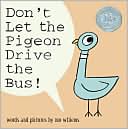
Mo Willems’s unparalleled children’s book titled Don’t Let the Pigeon Drive the Bus! is a splendid and comical tale of a character whose attitude is likely to appeal to children between the ages of four and seven, but all library patrons should find it delightfully entertaining. The book was named a Caldecott Honor Book in 2004, New York Times Bestseller, Publishers Weekly Bestseller, ALA Notable Book, and Booklist Editor’s Choice. The pigeon lies in wait for a bus driver to take a break so he can present his case on why he deserves to drive the bus. His arguments include that he is capable of driving because his cousin Herb drives a bus, that he wants to go first, that he can make it a game, that he will just go once around the block, that it is his dream, that he will pay money, that the reader’s mom would let him, that he will be the reader’s best friend, and that it is just a bus. Children and adults alike will be the masters of the pigeon’s fate and be forced to choose whether or not he or she will in fact let the pigeon drive after his temper tantrum and the bus driver returns to ask, “You didn’t let the pigeon drive the bus, did you?”
In my opinion, Mo Willems creates the perfect arguments and exquisite illustrations to back those up. His pigeon is adorable and irresistible until the tantrum where his eyes turn red. Still amused, we are forced to answer his plea. I liked that he is so dedicated to his request, and I especially liked that the book forces its readers to make that decision. After making the decision, the book is left open ended for readers. Readers can choose to be strong or give in, and create their own story. I also enjoyed the earthy tones and crayon colored illustrations. The pigeon is always looking at the reader, and children will finally be able to take the role of an adult and make choices about what is the easiest route and what is right.
I actually searched for this book in the library the other day because it is all the rage, and I wanted to know what it was all about. Our professor mentioned that the pigeon was on twitter, and since it was a Caldecott Honor book, I chose to use it as an entry for my reading journal. Basically, it reminds me of all children, and it makes me happy to see them forced to make a decision based on an argument because they often make the same type of argument. With the success of Don’t Let the Pigeon Drive the Bus!, Mo Willems went on to create Don't Let the Pigeon Stay Up Late!, The Pigeon Finds a Hot Dog!, The Pigeon Has Feelings, Too!, The Pigeon Loves Things That Go!, and The Pigeon Wants a Puppy. All of these books look to be just as entertaining and the arguments in them are the common ones of children around the world. Willems is also the author of Knuffle Bunny: A Cautionary Tale, Knuffle Bunny Too: A Case of Mistaken Identity, Edwina, the Dinosaur Who Didn't Know She Was Extinct, Leonardo, the Terrible Monster, Time to Pee!, and Time to Say "Please"! In addition to these books, Mo Willems also wrote another series called The Elephant and Piggie. Similar to the books about the infamous pigeon, these books get a lot of attention.
This particular book says something about what children find entertaining. In this book, they get to play the role of an adult in the decision making process. The illustrations are also geared particularly toward their interests, and they are simple which means that a child is capable of making the same ones. This is probably the reason that they are so entertained by them.
References
Willems, M. (2003). Don’t let the pigeon drive the bus. New York: Hyperion Books for Children.
Thursday, July 16, 2009
Caldecott Medal Book 2: My Friend Rabbit by Eric Rohmann

My Friend Rabbit by Eric Rohmann was the Caldecott Medal winner in 2003. The story would likely appeal to children between the ages of four and eight due to few words and vivid illustrations. The story is a charming tale about an awkward friendship. At the beginning of the story, Mouse lets us know that trouble follows his friend Rabbit. Rabbit can be found on the first page of the story holding Mouse’s plane. Due to Rabbit’s incredible strength, Mouse’s airplane ends up in a tree. Mouse is distraught about losing his plane and longingly stares at it. On impulse, Rabbit says that he will fix the problem. For the next eight pages, Rabbit finds several animal friends to help. He lifts each of them up, but none of them are able to reach the plane. He orders the animals to stand on one another, and the elephant, the rhinoceros, the deer, the duck, the bear, the hippopotamus, the crocodile, Mouse, Rabbit and the squirrel are standing on top of each other in that order. When this doesn’t work, Rabbit held the squirrel and the squirrel held Mouse. Regretfully, the entire pyramid tumbled down, and all of these animals were mad at Rabbit. Mouse managed to reach the plane and hold on. He begins to pilot the plane and retrieves Rabbit. Again, the plane is plunged into a tree because Rabbit is blocking Mouse’s vision with a hug. Mouse reiterates that wherever Rabbit goes, trouble follows, and one can not hold back the smile at the end of the book because Rabbit has an idea to save the day.
I enjoyed the story and its simplicity, but as I mentioned earlier, the book is for extremely young children. The story is uplifting and says a lot about friendship in its very few pages. Relationships with friends are not perfect, and there is a lot of give and take. Sometimes people mean well, and that is not the way that it seems. Mouse loves Rabbit despite his indiscretions, and I think that aside from the entertainment value, it is a heartwarming gesture. Rohmann’s illustrations are bright and explanatory. I especially enjoy that the pictures span two pages. The pictures are large, and I think that this is an excellent book to read aloud to a group of children.
Rabbit reminds me of my sister. Like him, she means well. When I was in the 10th grade, my final project for a Science class was an egg drop. After our thoughts on how to protect the egg were carried out, she demanded that she climb on top of the roof to test the project. Needless to say my egg never broke, but my sister’s ankle did when she fell. Though she is eight years older than me, she needs my supervision when performing her stunts.
Eric Rohmann also wrote and illustrated The Cinder-Eyed Cats, and Time Flies (also a Caldecott Honor book), and he illustrated The Prairie Train written by Antoine O’ Flatharta. Time Flies is a wordless picture book, which is a daring endeavor for any author in my opinion. This book, similar to My Friend Rabbit, must be examined extensively to make sense of all of the illustrations. Sometimes, fewer words create more meaning. Time Flies is about an adventurous bird that lands itself in a museum where dinosaurs come to life.
This book teaches children problem solving skills and that where there is a will there is a way. Also, children learn that people and relationships are not perfect, yet we love each other anyway. I learned that few words can have a very deep meaning, especially in a children’s book.
References
Rohmann, E. (2002). My friend Rabbit. Brookfield: Roaring Book Press.
Wednesday, July 15, 2009
Caldecott Honor Book 1: Olivia by Ian Falconer

Olivia is an enjoyable children’s book written and illustrated by Ian Falconer. The book was named a Caldecott Honor book in the year 2001, and New York Times named the book a # 1 best seller. Ian Falconer dedicates the book to his children: the real Olivia, Ian, and William, who was not born in enough time to play a role in Olivia. Olivia is a very talented little Piglet. The book is about her energetic personality and her relationship with her family. Typically, her energy is exhausting to her and everyone who comes into contact with her. She acts as a role model to her brother, and he is always mimicking her actions. She must be strong and discipline him because he won’t leave her alone. I very much enjoyed that the family has a dog and cat like the typical American family even though they are all pigs. Olivia has a rigid daily routine, like anyone else, and though her mother is busy and tired, she always finds time for Olivia even if a negotiation is required, and at the end of the day, her mother still loves her very much.
I very much enjoyed the book. Olivia is a delightful child, and I think that the fact that she is a pig would really appeal to young readers. As a child, I loved picture books featuring animals, and I think that reading those books as a child sparked my interest in animals. I remember drawing and coloring pictures of animals, and if I had read this book as a child, Olivia would have become an object of my art. I especially enjoyed the reference to Jason Pollock’s painting and the fact that Olivia wanted to copy his painting because she said that it couldn’t have taken him more than five minutes. I think that this part of the book shows us two things. The first is that children use childhood experiences to shape their lives and mimic whomever they come into contact with, and this is why it is so important that we make positive role models for them. The second is that children need to feel as if they can accomplish great things, and if we expect them to do something that they can’t do, they get discouraged. Olivia couldn’t wait to try to paint like Jason Pollock because she knew that she could, and she painted her masterpiece on the wall and got sent to time out.
After the success of Olivia, Falconer proceeded to write the sequels Olivia and the Missing Toy, Olivia Saves the Circus, Olivia Forms a Band, and Olivia Helps with Christmas. Again, Falconer uses his children as characters in the story, and they seem so real. In Olivia Saves the Circus, she again shows her energetic and uncanny ability to please people with her courage. When she realized that all of the circus performers at the circus that she and her mother went to were sick, she begins to perform the circus acts.
In reading this book, I learned that children’s books in general have the ability to please even adults. Falconer teaches children and adults that life is what we make it, and these characters have busy daily lives, but they make time for each other. This book says a lot about the closeness of family as well.
References
Falconer, I. (2000). Olivia. New York: Atheneum Books for Young Readers.
Tuesday, July 14, 2009
Caldecott vs. Newbery


Caldecott and Newbery Medals are both extremely prestigious awards granted to the authors of special works. Both awards are sponsored by the Association for Library Service to Children division of the American Library Association. The Caldecott Medal is awarded to the most distinguished picture book illustrator, and the Newbery award is granted to the author of the most distinguished piece of literature. Both of these awards are granted annually, and both awards are also only given to U.S. Citizens. Additionally, each award also recognizes a list of honor books, yearly.
In the Appendix section of Essentials of Children's Literature, one can locate a list of these books for each year. For example, in 2004, the winner of the Caldecott Medal was The Man Who Walked Between the Towers by Mordecai Gerstein, and honor books for this award include Ella Sarah Gets Dressed by Margaret Chodos-Irvine, What Do You Do With a Tail Like This? by Steve Jenkins and Robin Page, and Don't Let the Pigeon Drive the Bus by Mo Willems. That same year, The Tale of Desperaux: Being the Story of a Mouse, a Princess, Some Soup, and a Spool of Thread by Kate DiCamillo won the Newbery Medal, and honor books in 2004 include Olive's Ocean by Kevin Henkes, and An American Plague: The True and Terrifying Story of the Yellow Fever Epidemic of 1793 by Jim Murphy (Brown and Tomlinson, 2005). I think that both of these awards are equally prestigious but target different talents. Again, they are both awarded by the same association, given annually, and one must be a U.S. Citizen to receive the award, but the Caldecott Medal is given to an illustrator, and the Newbery Medal is given to an author of distinguished literature.
References
Brown, C. L. & Tomlinson, C. M. (2005). Essentials of children's literature.(5th ed.). Boston: Pearson A and B.
Subscribe to:
Posts (Atom)


